B2B Lead Generation in Morocco: LinkedIn, Trade Shows and Distributors

Jeraya Team
November 14, 2026Most foreign companies entering Morocco pick one lead channel, run it for a quarter, and conclude that "Morocco doesn't work." The market is fine. The mistake is treating LinkedIn, trade shows and distributors as rival options when they are three stages of one pipeline.
In a country where traditional shops, souks and informal channels still account for around 80% of retail, and where business is built on relationships, no single channel can find, convince and physically reach your buyers. This guide shows what each channel is really good at, what it costs you, and how to sequence them.

The short answer: use them in sequence
| Channel | Its real job | Speed | Main risk |
|---|---|---|---|
| Find and open conversations with managers and specialists | Weeks | Reaches fewer senior owners than you expect | |
| Trade shows | Build trust face to face and compress months of meetings into days | Concentrated, 1–3 days | Expensive if you go without pre-booked meetings |
| Distributors | Physical coverage, credit and after-sales across a fragmented market | Slowest to set up | Losing control of price and brand |
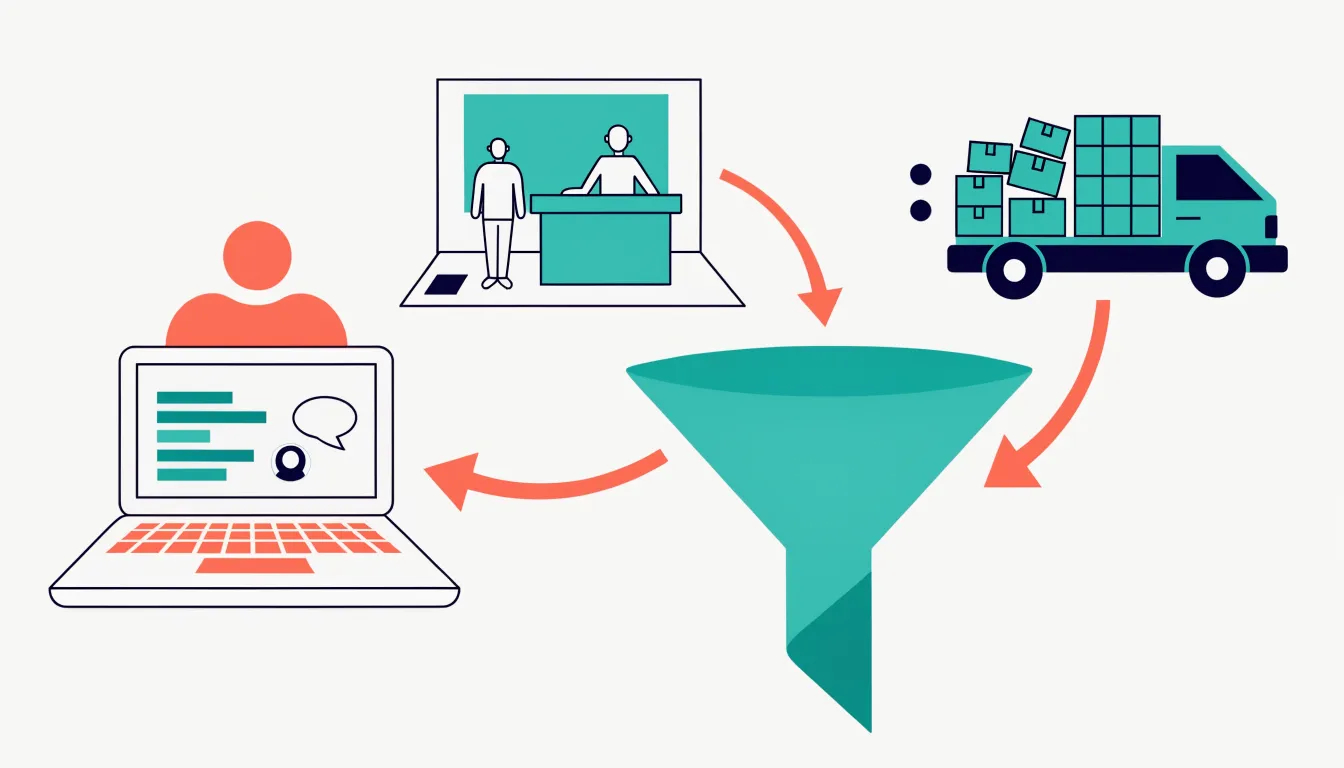
The contrarian take: start with the distributor question, not LinkedIn. If most of your end customers buy through traditional channels, the distributor decides your ceiling. LinkedIn and trade shows are how you find and win the right one.
Channel 1: LinkedIn, powerful but narrower than it looks
LinkedIn is bigger in Morocco than most teams assume. NapoleonCat's ad-audience estimate puts it at about 7.9 million members, roughly 20% of the population in mid-2026. It also grew from about 6.8 million in mid-2025.
Now the catch. The same data shows that about half of those members are 25 to 34 and only around 15% are 35 or older. These are estimates of the addressable audience, not a census. Still, the pattern is clear: LinkedIn is excellent for reaching procurement managers, engineers, marketing leads and finance staff. It is weaker for the 55-year-old founder of a family-owned distributor, who is more likely to be reached through a phone call, a trade show or WhatsApp.
What good looks like. A large 2025–26 analysis of 13.2 million connection requests, summarised by Focus Digital, reports a 28.5% connection acceptance rate. Another benchmark roundup treats a meeting conversion of 2% to 5% of prospects messaged as solid. These are global figures, so treat them as a sanity check rather than a promise for Morocco.
An illustrative example: message 500 well-targeted prospects. At those benchmarks you would expect roughly 140 accepted connections and 10 to 25 meetings. That is a good outcome for a few weeks of disciplined work, and a poor one if you spray 500 generic messages.
A LinkedIn routine that fits Morocco
- Write your profile in the language of your buyer. Many Moroccan B2B buyers work comfortably in French and Arabic as well as English. Offer at least a French headline and summary if your buyers are in traditional sectors.
- Target by role and sector, not by company size. Build lists of 50 to 100 people at a time: purchasing, operations, technical directors.
- Warm up before you pitch. Comment on two or three of their posts, then connect with a short note that mentions something specific.
- Move the conversation off the platform quickly. Moroccan business culture is relationship-led. As one LinkedIn author on the topic puts it, trust and personal connections are the foundation of lasting engagements. A call or a WhatsApp voice note beats a fourth InMail.
- Track meetings, not likes. Reply rate is a vanity metric. Count meetings booked and opportunities opened.
Counterargument: "LinkedIn is for recruiters, my buyers are on Facebook." Partly true, and scepticism about online selling is real. Software engineer Aymen Jarouih told Morocco World News (in 2020) that “many people still have to be convinced of the results” of online promotion. Expect to prove value with a call and a reference, not a pitch deck alone. Facebook has roughly 30 million users in Morocco, far more than LinkedIn. If you sell to small traders, Facebook and WhatsApp deserve a budget line. But if you sell to companies with a purchasing function, LinkedIn remains the most efficient way to find the right person by name.
Channel 2: Trade shows, where trust gets built fast
Morocco's trade-show calendar is dense, and the numbers are large enough that the right show can replace months of cold outreach.
- GITEX Africa 2026 (Marrakech, 7–9 April) drew more than 55,000 visitors, 412 investors and 4,600 business meetings, according to the figures announced by Morocco's digital transition minister.
- SIAM 2026 (Meknes, 20–28 April) recorded 1,136,952 visitors and 1,590 exhibitors from 76 countries. Much of that footfall is the general public, but the show opens to professionals first: professional days ran from 20 April, with the public admitted from 22 April. If you sell agri-food or agricultural equipment, those first days are what you are paying for.
- Casablanca specialist shows continue through the autumn. Directories list Africa Food Show Morocco and CTW Morocco in mid-to-late November 2026, followed by an electricity, electronics and renewable-energy cluster in late November. Dates differ between directories (one lists Africa Food Show on 17–19 November), so confirm with the organiser before booking travel.
A real example of using a show well. The Korea-Africa Foundation brought seven Korean startups to GITEX Africa 2026, its third consecutive year at the event. Returning year after year is the point: in a relationship market, repeated presence signals that you are staying.
The playbook that makes a show pay
- Before (4 to 6 weeks out): Use LinkedIn to pre-book 10 to 20 meetings with named people. A show where you only wait at the stand is a brochure, not a sales channel.
- During: Bring a one-page offer in French and English, a clear price or price range, and a way to capture details on the spot. Log every conversation the same evening.
- After (within 48 hours): Send a personal follow-up, ideally on WhatsApp where the person already chatted with you, then invite them to a proper meeting.
Local reporting on this year's edition summed up the mood well: the event is increasingly a place to work and test, not just exhibit. Come with a purpose, not just a stand.
Channel 3: Distributors, your route to a fragmented market
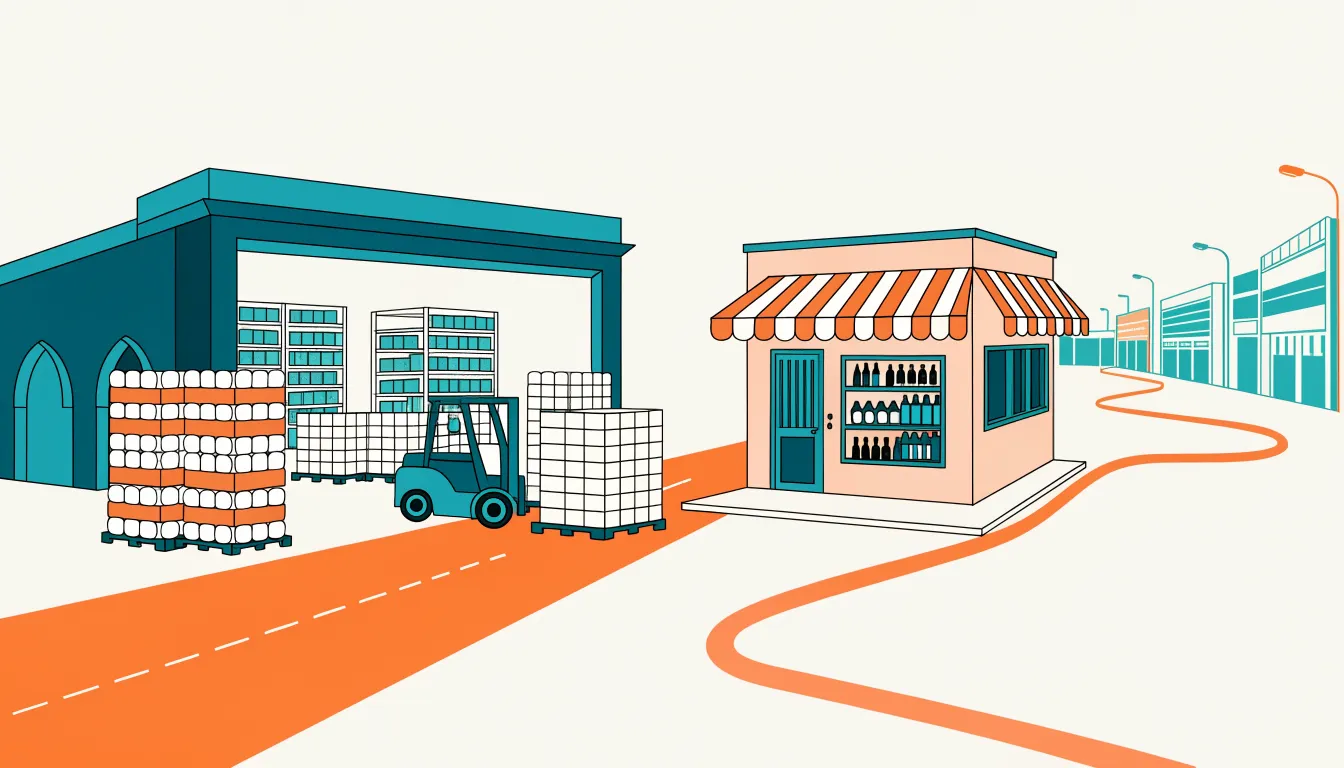
Distribution is where Morocco differs most from a standard export playbook. The same report cited earlier describes a market still dominated by souks, markets, informal channels and neighbourhood shops at around 80%, while on the modern side Marjane is estimated to hold 50% to 55% of the modern grocery channel and Retail Holding 35% to 40% (the report presents these as estimates). In plain terms, you either deal with a handful of powerful chains or you need someone with trucks, credit relationships and local knowledge to reach thousands of small outlets.
Finding candidates. Registry data from InfobelPRO lists more than 336,000 entities classified as distribution and wholesale from the OMPIC register, about 40% of them in Casablanca. Treat that number as an upper bound, because registrations include inactive and tiny entities. Directories such as Kompass list thousands of distributors by product category. The shortlist then comes from trade shows, your embassy's trade office, and referrals from non-competing suppliers.
For a deeper look at regulation and channels, the U.S. government's Morocco Country Commercial Guide covers how products move from port to final destination.
How to vet a distributor. Ask for the following before you sign anything:
- Which regions and customer types they actually cover, with names of current customers you can call.
- Which competing or adjacent brands they carry, and whether there is a conflict.
- Their credit terms to customers and their own payment record to suppliers.
- Warehousing, delivery and after-sales capacity.
- A written plan for the first 12 months, with targets.
Protect yourself in the contract. Keep exclusivity limited by territory and time, tie it to minimum performance targets, and agree who owns customer data and brand assets. Have a Morocco-qualified lawyer review the agreement. If you do not yet have a local entity, our guide on how to register a company in Morocco as a foreigner explains the options, and the piece on Morocco as a gateway to Africa, Europe and the Gulf shows how a local presence can unlock regional markets.
A short story: how the three channels fit together
Imagine a European maker of food-packaging machinery (a hypothetical, composite example). It starts on LinkedIn and sends 300 messages to plant managers and purchasing leads in Casablanca and Tangier. It books a dozen calls, but deals stall because buyers want to see the machine and meet the team.
Next, it takes a small stand at a Casablanca food-industry show and pre-books 15 meetings from its LinkedIn conversations. Three prospects ask who will service the machine locally. That question reveals the real bottleneck.
Finally, it signs a regional technical distributor with a service team. Within a year, the LinkedIn and show leads convert at a visibly higher rate, because buyers now see a local partner behind the foreign brand. No single channel did the job; the sequence did.
Connecting the channels: WhatsApp and your CRM
WhatsApp is the glue. In relationship-driven markets it works as a high-trust channel for conversations that are already underway rather than a cold-outreach tool, so use it after the first LinkedIn or show contact.
The second piece is a single record of every lead, wherever it came from. Without it, show contacts live in a notebook, LinkedIn leads in a spreadsheet, and the distributor's leads in someone else's head. Tag each lead with its source and stage so you can see which channel produces meetings, quotes and signed orders. If you want a ready-made approach, see our walkthrough on building an AI-powered CRM with Jeraya, and for the follow-up tasks that otherwise get dropped, how to automate repetitive business tasks with AI.
Stay on the right side of Morocco's data law
Outreach in Morocco falls under Law 09-08 and the CNDP. Direct marketing by email, automated calling or fax using someone's personal data without prior consent is prohibited, with a limited exception for email to people whose address you obtained directly from them, as summarised by DLA Piper's data protection guide. Some practitioner handbooks note that the email restriction targets individuals rather than companies, but a named work email is still personal data, and the CNDP defines prospecting broadly. The safe approach:
- Prefer opt-in lists and warm conversations over scraped mass emailing.
- Record where each contact came from.
- Include a simple opt-out in every message.
- Ask a Morocco-qualified lawyer to review your process before you scale it.
This is general information, not legal advice.
A 90-day plan you can start this week
- Days 1–15: Define and prepare. Choose one sector, one region and one offer. Build a list of 100 target buyers and 10 distributor candidates. Translate your one-pager into French.
- Days 16–45: LinkedIn and calls. Run the warm-up routine above. Aim for 15 to 25 conversations and book distributor intro calls.
- Days 46–70: Show or site visits. Choose one trade show that matches your sector. Pre-book meetings, then visit two shortlisted distributors in person.
- Days 71–90: Decide and measure. Pick a pilot distributor on a time-limited, target-based agreement. Review your CRM: which channel produced meetings, quotes and orders? Double down on that one.
Frequently asked questions
Is LinkedIn effective for B2B lead generation in Morocco? Yes, for reaching managers and specialists. With about 7.9 million members, it has real scale, but its audience skews young, so pair it with calls, WhatsApp and events to reach senior owners.
Which trade shows matter most for B2B in Morocco? It depends on your sector: GITEX Africa for technology, SIAM for agriculture and food, and specialist Casablanca shows for energy, electronics, cleaning, chemicals and industry. Always check dates with the organiser, as listings can differ.
Do I need a distributor to sell in Morocco? Not always. If you sell to a small number of large industrial buyers, direct sales plus a local agent can work. If your buyers are many small outlets, a distributor is usually the practical route.
How do I find a reliable distributor in Morocco? Combine registry and directory searches, trade-show meetings and referrals, then verify coverage, references, credit terms and service capacity before signing.
Is cold email allowed in Morocco? Law 09-08 requires prior consent for email direct marketing based on personal data, with limited exceptions. Because interpretation matters for B2B, get legal advice before running a campaign.
The takeaway
Do not ask which channel is best. Ask which job each channel does. Use LinkedIn to find and open doors, trade shows to build trust in days instead of months, and distributors to deliver coverage you cannot build alone. Hold the whole pipeline together with a CRM, WhatsApp follow-up and respect for Morocco's consent rules. Run the 90-day plan, measure by meetings and orders, and keep the channel that earns it.
Figures were checked against the cited sources as of mid-November 2026. Trade-show dates and audience estimates change, so confirm details with the organisers before you commit budget.