
Morocco's net foreign direct investment jumped 58.4% in the first nine months of 2026, to about MAD 35.2 billion (roughly $3.8 billion), according to Office des Changes data reported on 31 October. Rising inflows and falling outflows both contributed. That detail matters, because it tells you what kind of story this is. It is a story about a country whose industrial model is working, and not a story about a hot market that anyone can ride.
This overview covers what is driving capital into Morocco for 2026–2027, which sectors are real, where the risks sit, and how to decide whether it belongs in your plan.
The short answer: why investors are looking at Morocco now
Four things line up in 2026–2027:
- Momentum in capital flows. FDI receipts rose 21.8% to MAD 53.4 billion ($5.8 billion) in the nine months to September 2026, while outflows fell. Morocco's investment minister, Karim Zidane, cited about MAD 56 billion ($6 billion) of FDI in 2025.
- Steady growth in a weak region. The IMF's October outlook has Morocco growing 4.5% in 2026 and 4.2% in 2027, against 3.1% and 3.4% for the world economy. It also expects inflation of just 0.9% in 2026.
- A credit upgrade. S&P moved Morocco to investment grade in September 2025, according to Allianz Trade, which also notes deficits averaging about 3% of GDP through 2027.
- A hard deadline. The 2030 World Cup, co-hosted with Spain and Portugal, has pulled forward a build-out the government puts at MAD 380 billion ($41 billion).
A quick scenario: the plant manager's decision
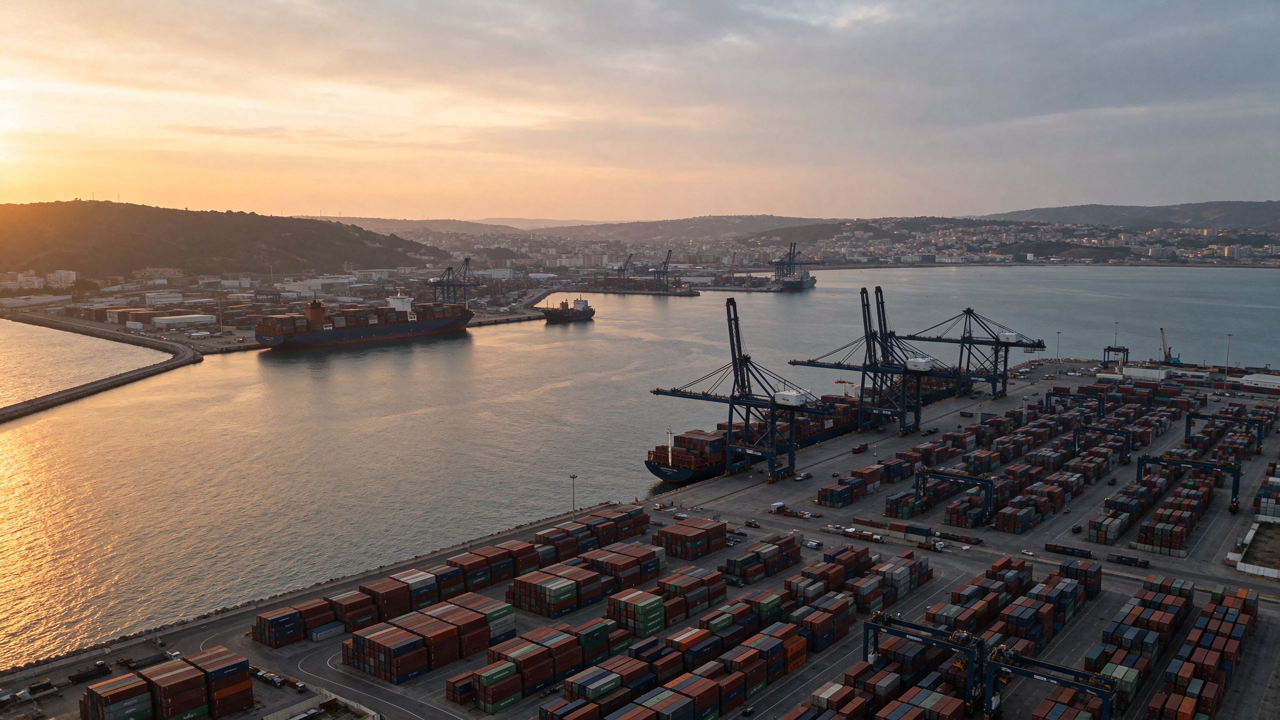
Picture a mid-sized European parts maker that has to choose where to put its next plant to serve EU carmakers. The brief is short: stay close to Europe, keep labor costs competitive, and avoid single points of failure in the supply chain. Morocco's pitch lands here. It sits a short sea crossing from Spain, and carmakers such as Renault and Stellantis already run large plants there, with a supplier base of more than 270 companies. This is an illustrative scenario, not a specific company, but it is the logic behind much of the capital arriving today.
Sector by sector: where the money is actually going
Automotive and batteries: the proven engine
The car industry is Morocco's export anchor. Automotive exports hit a record MAD 157.6 billion in 2024, slipped about 2% to MAD 154.5 billion in 2025, then rebounded 18.6% in the first four months of 2026.
Recent commitments show the sector moving up the value chain:
- Stellantis invested about €1.2 billion to expand its Kenitra plant toward 535,000 vehicles a year, with an expected 3,100 direct jobs.
- Chinese battery maker Gotion signed for a first EV battery gigafactory in Kenitra, with an initial investment of about $1.3 billion and 20 GWh of initial capacity.
Industry and Trade Minister Ryad Mezzour called the Stellantis project "an exceptional partnership that strengthens our industrial and technological sovereignty."
Renewables and green hydrogen: big numbers, early stage
Morocco has offered up to one million hectares for green hydrogen under its "Offre Maroc" program. Land reservation contracts were signed with five investors in February 2026, and in June monitoring committees approved the first technical deliverables for the ORNX and TAQA-Moeve projects. The headline portfolio is about MAD 319 billion.
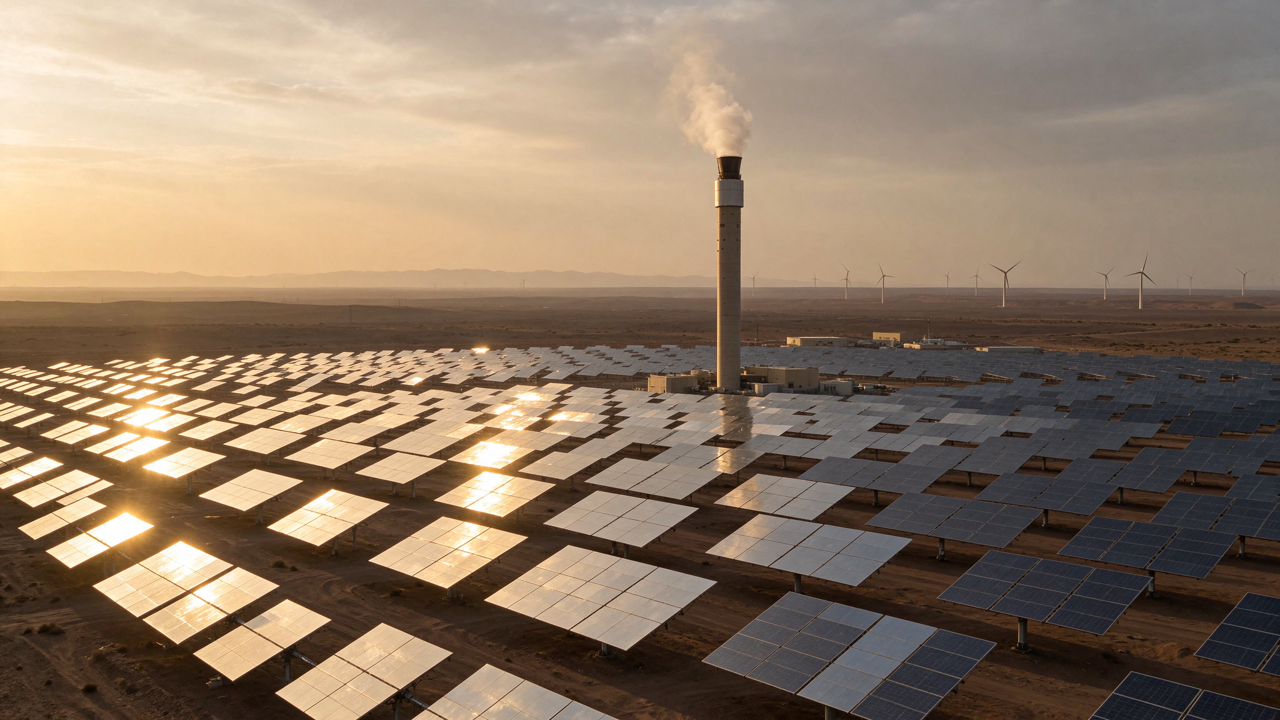
Read that carefully. The final phase is still signing investment agreements with the government before construction can begin. Local press has noted that none of the eight major projects studied is under construction yet. The more mature part of the energy story is conventional renewables, where Saudi group Acwa has already invested close to $3 billion in Moroccan solar and wind and is eyeing desalination and hydrogen next.
Infrastructure, logistics and tourism: the World Cup effect
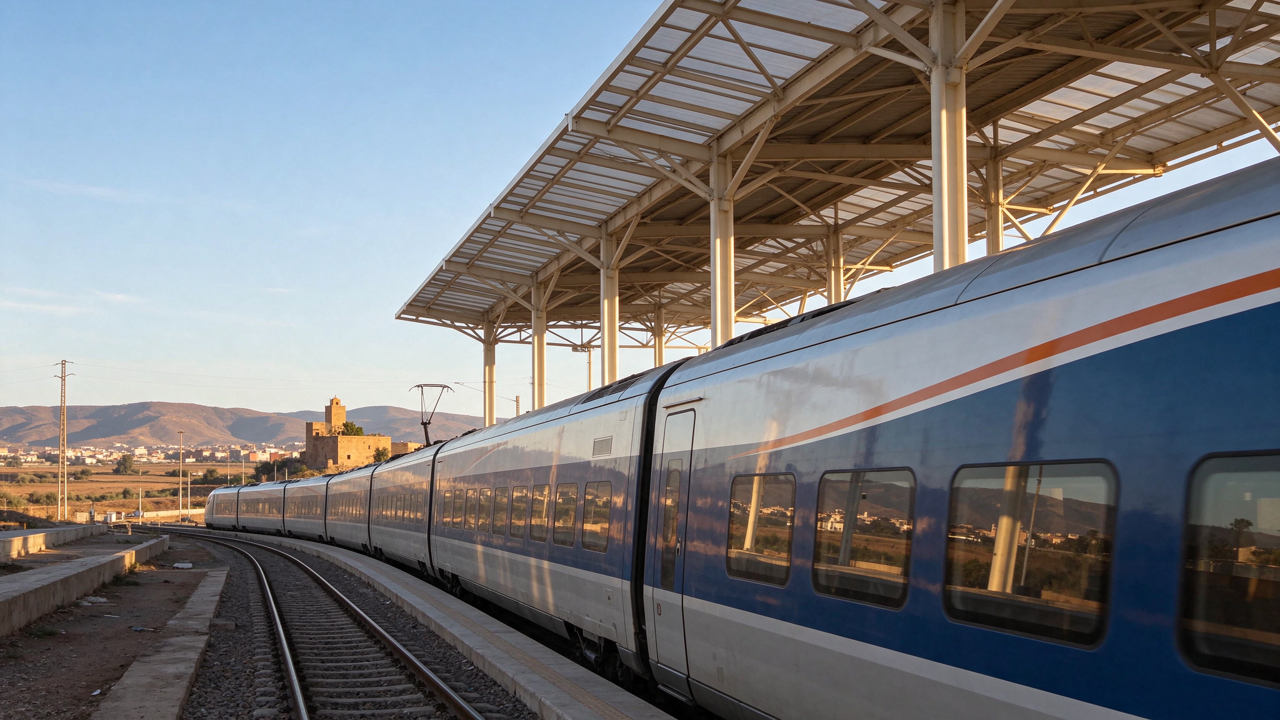
Spending is flowing to airports (a $4.2 billion plan), high-speed rail, highways and logistics zones. Tourism reached a record 19.8 million visitors in 2025, putting Morocco 22nd in the world. For investors, the opportunity is less in the stadiums themselves and more in what follows: hotels, logistics, services and real estate serving the new capacity.
The numbers at a glance
| Indicator | Figure | Source |
|---|---|---|
| Net FDI, Jan–Sep 2026 | ~MAD 35.2bn (+58.4%) | Office des Changes, via Rio Times |
| GDP growth 2026 / 2027 | 4.5% / 4.2% | IMF, October 2026 |
| Inflation 2026 / 2027 | 0.9% / 1.4% | IMF, October 2026 |
| Unemployment 2025 → 2027 | 13% → 11.3% | IMF, October 2026 |
| Fiscal deficit 2026 / 2027 | 3.5% / 3.3% of GDP | World Bank, October 2026 |
| FDI stock, end-2025 | MAD 756.9bn (+16%) | Via Morocco World News |
The contrarian view: strong flows are not the same as a strong economy
Headline FDI growth can mislead, and two details are worth holding in mind.
First, the 58% jump partly reflects a fall in outflows (down 47% in the seven months to July). Net numbers swing with timing. Second, strong investment has not yet fixed the jobs problem. Unemployment is 13% by the IMF's count, youth unemployment is around 35%, and about three-quarters of the workforce is informal, per Allianz Trade. A Moroccan analysis of FDI makes the same point: the challenge is turning inflows into jobs and growth.
Counterarguments and risks to weigh
- Water and drought. Morocco has lived through a seventh straight year of drought by one 2026 assessment, and 2025's rain brought only temporary relief. Water-intensive projects need a desalination or reuse plan from day one.
- The forecast is not unanimous. Morocco's planning commission (HCP) sees growth slowing to 3% in 2027, well below the IMF's 4.2%.
- Public money doing the heavy lifting. The IMF names the main domestic risk as weaker-than-expected gains from public infrastructure investment, and the World Bank flags debt and financing pressure. The World Cup program is partly debt-funded.
- Election-year spending. Coface notes that 2026 is an election year and spending could overshoot the budget.
- Current account. Forecasts for the 2026 deficit range from roughly 3.6% (World Bank) to 4.9% of GDP (IMF).
- Legal and reputational exposure in the south. Several hydrogen and renewables projects are planned in Dakhla, Laayoune and Boujdour, in Western Sahara. Advocacy group WSRW argues such projects raise questions under international law. Get specific legal advice before committing capital there.
How to evaluate Morocco in five steps
- Pick the sector first. The proven cases are automotive, aerospace, renewables and logistics. Hydrogen is a longer-dated option.
- Test the export logic. Morocco works best when you sell into Europe or Africa from a Moroccan base. Domestic-only plays carry a different risk profile.
- Check the incentives under the 2022 Investment Charter. Incentives vary by project size, region and job creation. Confirm eligibility in writing.
- Stress-test water, energy and labor. Model a drought year and a slower-growth year (use the HCP's 3% as the downside).
- Plan the entry structure. A Moroccan LLC can be registered with a minimum capital of about $3,200, but sector licenses and land are where timelines slip. Use local counsel.
Frequently asked questions
Is Morocco a good place to invest in 2026? For export-oriented industry and infrastructure-linked sectors, the data is favorable: strong FDI flows, 4.5% projected growth, low inflation and an investment-grade rating. It is less straightforward for water-intensive or domestic-demand businesses.
Which sectors attract the most foreign investment? Automotive, aerospace, energy, mining, transport, tourism and real estate, according to Moroccan economic press.
What is Morocco's growth forecast for 2027? The IMF projects 4.2%, the World Bank holds its earlier 2027 forecast unchanged, and the HCP expects 3%. Plan around a range.
What are the biggest risks? Drought and water scarcity, youth unemployment, reliance on public investment, and (for projects in the south) legal and reputational risk.
Does the 2030 World Cup matter for investors? Yes, as a deadline that pulls forward airports, rail, roads and hospitality. Treat it as a catalyst, not a business case on its own.
The takeaway
Morocco in 2026–2027 is best understood as an industrial platform with a deadline, not a frontier-market bet. The capital is following proven sectors, a stable policy framework and proximity to Europe. The upside is real, and so are water, jobs and execution risk. If your thesis survives a 3% growth year and a dry year, it probably survives Morocco.
This article is general information, not investment, legal or tax advice. Figures are as reported by the cited sources as of mid-November 2026; verify current data before committing capital.
Sources: Office des Changes via Rio Times; IMF via Morocco World News; World Bank via Morocco World News; IMF 2026 Article IV report; Allianz Trade; Coface.