Best Sectors for Foreign Investors in Morocco (2026): Automotive, Aerospace, Offshoring, Green Hydrogen, Agri-Food, Pharma and Data Centers

Jeraya Team
November 16, 2026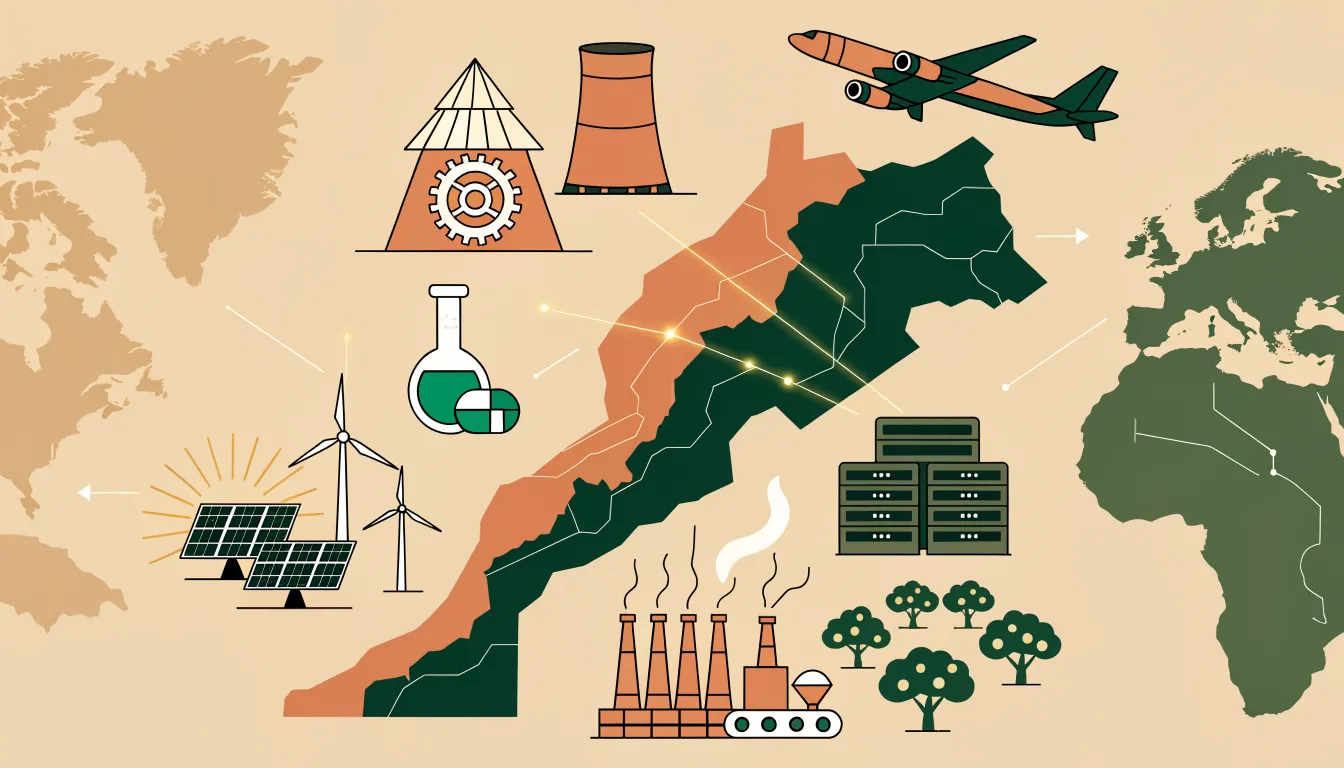
In 2025, net foreign direct investment into Morocco jumped 74.3% to MAD 28.4 billion (about $3.1 billion), according to the Office des Changes (L'Economiste). UNCTAD's World Investment Report 2026 puts gross inflows at $3.33 billion, up 91% in a year when most of the world saw a patchy recovery (Capmad).
Capital is arriving. The harder question is where in Morocco it should go.
This guide ranks the seven sectors that most foreign investors look at: automotive, aerospace, offshoring, green hydrogen, agri-food, pharma and data centers. For each one you get the latest numbers, who is already there, where the openings are for newcomers, and what can go wrong. Start with the comparison table below to match a sector to your own size, budget and risk appetite.
Quick context: If you are still deciding whether to invest in Morocco at all, start with our investor's overview of Morocco for 2026–2027. This article assumes you're past that point and choosing where.
The short answer: which sector fits which investor?
| Sector | 2025 headline number | Best fit for | Entry ticket | Main risk |
|---|---|---|---|---|
| Automotive | MAD 159.2bn in exports | Tier-1/2/3 parts suppliers, EV battery chain | Medium–high | Demand swings in Europe |
| Aerospace | ~$3bn in exports | Precision machining, composites, engine parts | Medium–high | Long certification cycles |
| Offshoring | MAD 27bn service exports | IT, BPO, engineering & digital services | Low | Shift away from call centers |
| Green hydrogen | MAD 319bn project pipeline | Utilities, EPCs, equipment & service vendors | Very high (or supplier role) | Execution and offtake |
| Agri-food | MAD 86.2bn in exports | Processing, cold chain, packaging, agritech | Low–medium | Drought and water stress |
| Pharma | 2nd-largest drug producer in Africa | Generics, biotech, fill-finish, CDMO | Medium | Slow marketing approvals |
| Data centers | ~2 GW announced pipeline | Infrastructure funds, cloud and AI operators | Very high (or service role) | Power supply, demand ramp |
Sources for each figure are linked in the sections below.
Export revenue by sector, 2025
| Sector | 2025 exports (MAD billion) | Relative size |
|---|---|---|
| Automotive | 159.2 | ████████████████ |
| Agri-food | 86.2 | █████████ |
| Aerospace | 27.45 | ███ |
| Offshoring (services) | 27.0 | ███ |
Sources: Office des Changes (automotive), Morocco Foodex (agri-food), GIMAS (aerospace), Ministry of Digital Transition (offshoring).
What most investors get wrong about Morocco
The common pitch is “low labor costs, close to Europe.” That's true, but it's no longer the main reason companies win here, and it leads investors into the wrong decisions.
The real advantage is the cluster around you, not cheap labor. Renault's Tangier plant sits next to its suppliers, a rail line and Tangier Med port. Renault Morocco describes the result as one of the most integrated automotive ecosystems in the world (Morocco World News). The investors who do best in Morocco treat it as a place to plug into a supply chain that already works. Those who treat it as somewhere to cut wages tend to do worse.
The headlines also run ahead of the data. You'll read that Morocco “produced one million cars in 2025.” Officials did announce that the country reached one million vehicles of capacity. But continental production data compiled in 2026 shows Morocco built 501,965 vehicles in 2025, down 11.5% year-on-year (Morocco World News). Capacity and output aren't the same thing, and planning a supplier business on the wrong one will mislead you.
The rest of this guide tries to keep the two apart.
1. Automotive: the anchor sector, now pivoting to EVs
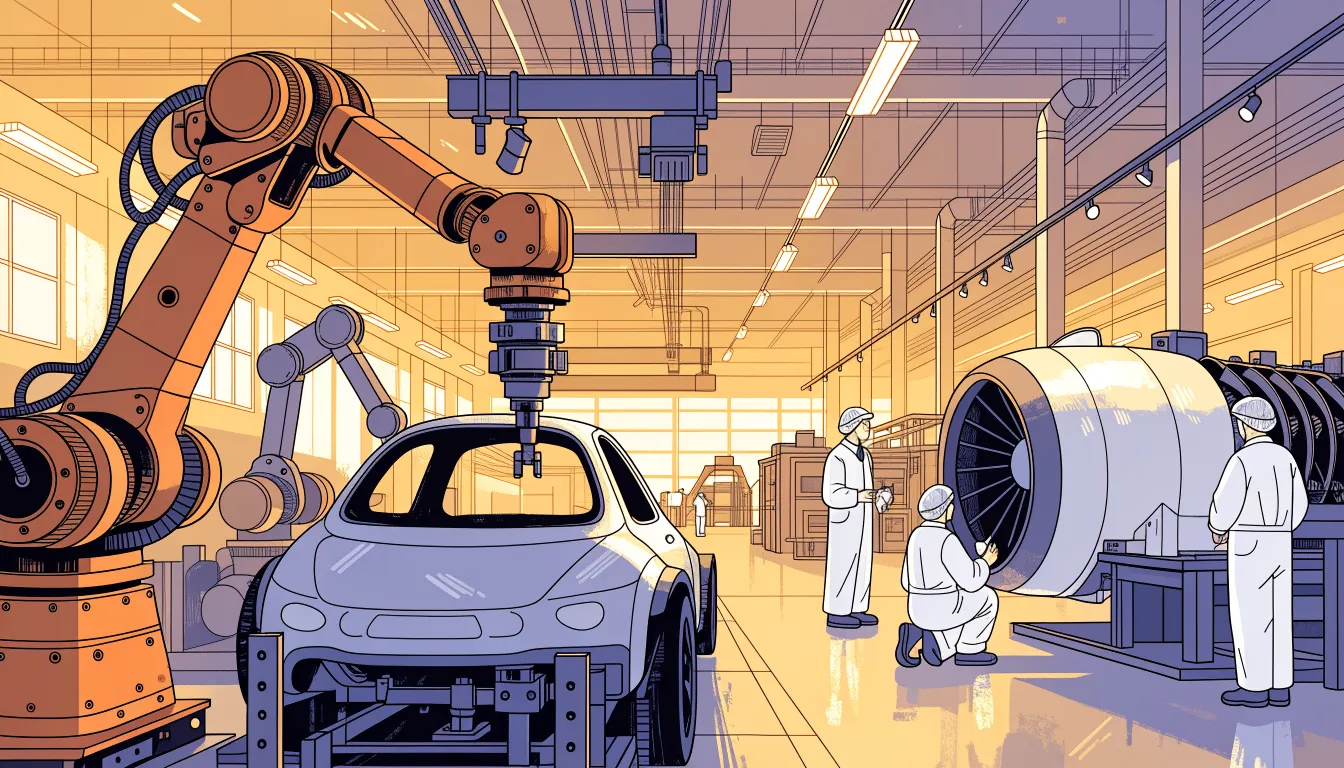
The numbers. Automotive was Morocco's top export sector for the third year running in 2025, with MAD 159.2 billion in exports (La Vie Éco). The ministry admitted 2025 was a hard year for the sector (La Vie Éco), but it recovered quickly: exports reached MAD 93.7 billion by the end of June 2026, up 17.4% on a year earlier (AllAfrica / Office des Changes).
Who's there. Renault and Stellantis are the two anchor OEMs. Renault Morocco built 394,000+ vehicles in 2025 and exported about 82% of them to 63 markets. It has more than 500,000 units of installed capacity and is targeting 80% local integration by 2030, which means about €3 billion of local sourcing (North Africa Post).
Where the opening is. That €3 billion local-sourcing target is the clearest opportunity in the sector. Every part that's still imported is a part Renault wants to buy locally. The second opening is the EV battery chain. Gotion High-Tech's Kenitra gigafactory, Africa's first, starts with 10 GWh of LFP cells and plans to scale to 100 GWh (ESS News). Total investment across all phases is about $6.5 billion (Morocco World News). A plant that size needs suppliers of materials, packaging, logistics, maintenance and testing.
A short scenario. Picture a mid-sized Spanish maker of plastic interior trim. It ships parts by truck from Valencia to Tangier, and its customer keeps pushing for local content. If it opens a small plant in the Tangier Automotive City free zone, it cuts transit time to hours, adds to the OEM's local-integration figures (which helps it win the next contract), and gets lower costs too. Lower costs are a bonus. The main reason to move is that the customer's integration target makes a local supplier more valuable.
Watch out for: European demand cycles and emissions rules. Morocco exports most of what it builds, so a slowdown in EU car sales hits Moroccan output directly.
2. Aerospace: smaller, but climbing the value chain
The numbers. Aerospace exports were about $3 billion (MAD 27.45 billion) in 2025. Industry body GIMAS forecasts $5 billion within three years (Reuters via Euronext). About 25,000 people work across roughly 160 companies, including suppliers to Airbus, Boeing and Safran. Local integration is about 42% (MAP).
“Morocco has transformed itself into a strategic aerospace hub.” Adil Jalali, then-President of GIMAS (Morocco World News)
Where the opening is. The sector is moving from assembling airframe parts to making higher-value engine components, centered on the Nouaceur cluster near Casablanca (Morocco World News). Safran's recent investments sped this up (TelQuel). Precision machining, surface treatment, composites, MRO and special processes are the gaps where a specialist supplier can follow its customers in.
Watch out for: certification. Getting qualified by an OEM takes time, so expect a longer ramp-up than in automotive. On the plus side, once a supplier is approved, contracts tend to last for years.
3. Offshoring: the lowest-cost way in, if you pick the right niche
The numbers. The offshoring sector employs about 150,000 people and earned MAD 27 billion in service exports in 2025, mostly from French-speaking Europe. The national strategy targets MAD 40 billion and 270,000 jobs by 2030 (Morocco World News).
The shift you need to know about. Call centers, long the core of the sector, are losing ground, partly because of new legal restrictions in France, its biggest market. Higher-value digital services are replacing them: software, data, engineering services and AI operations (Morocco World News). The renewed offshoring framework, which took effect retroactively from July 2025, recognizes dedicated P2I Offshoring zones and promises to handle installation requests in five working days (Outsource Accelerator).
Where the opening is. For an SME, offshoring is the cheapest way to enter Morocco: you need no factory, just people and an office. A European software or marketing agency can open a delivery center in Casablanca, Rabat or Tetouan with a small team and grow it. Hiring is the hard part, so read our guide to hiring agencies in Morocco for foreign companies. If you're EU-based, plan for data protection from day one: the CNDP says data privacy sits at the core of the sector's strategy.
Watch out for: competition for senior tech talent in Casablanca. Secondary cities are often a better bet for keeping staff.
4. Green hydrogen: huge pipeline, still early
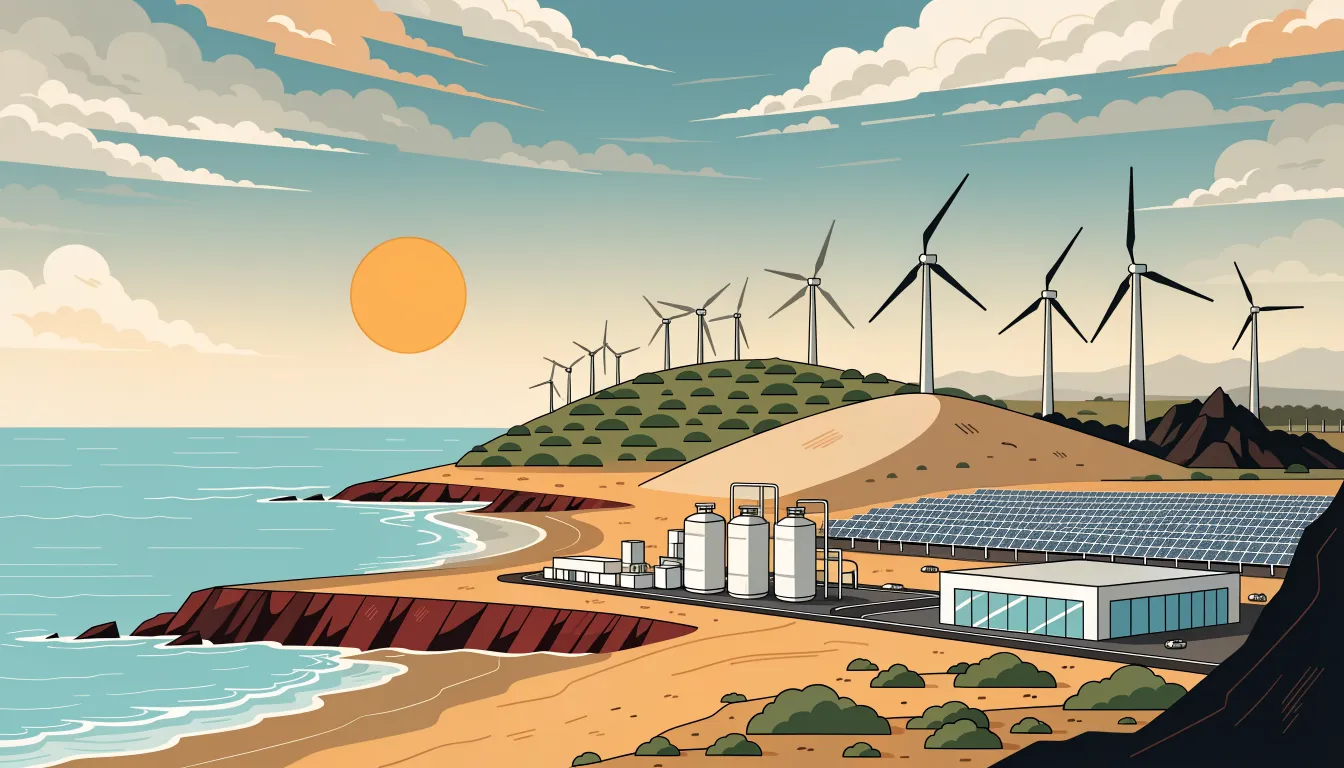
The numbers. Under the “Offre Maroc” framework, the government selected five investors for six green hydrogen projects worth MAD 319 billion (about $32 billion) in March 2025, located in the southern regions (MAP).
Who's there. The selected groups include the ORNX consortium (Ortus of the US, Acciona of Spain and Nordex of Germany) working on ammonia; Taqa (UAE) with Cepsa (Spain) on ammonia and synthetic fuels; Saudi Arabia's Acwa Power on green steel; and Morocco's Nareva (MAP; AGBI).
Where the opening is. Unless you're a utility or a sovereign-backed developer, don't compete for a hydrogen concession. Supply the projects. Desalination, electrolyzer balance-of-plant, wind and solar O&M, grid works, port handling for ammonia, safety training and environmental monitoring will all be needed for a decade or more. A specialist contractor can win business here without the capital or offtake risk the developers carry.
Watch out for: long timelines and offtake. Green hydrogen around the world depends on whether buyers sign long-term contracts. Treat any project date as a goal rather than a firm schedule.
5. Agri-food: big, steady and under-processed
The numbers. Agri-food exports reached MAD 86.2 billion in 2025, up 38% since 2020. That makes the sector Morocco's third-largest source of foreign currency and about 18% of total exports (Le360). Morocco shipped €3.75 billion of agri-food products to the EU alone in 2025 (Morocco World News).
Where the opening is. Much of what Morocco exports still leaves as fresh produce, and processing is where more of the value gets added. Openings include frozen and dried fruit, olive oil and argan products, sauces and ready meals, cold-chain logistics, packaging, and agritech for water efficiency. The “Made in Morocco” label push and Morocco's free-trade network make processed goods easier to sell abroad. Our guide to Morocco's trade agreements explains how rules of origin work in practice.
Watch out for: water and volume swings. Citrus export volumes fell 12% (Le360), and EU imports of Moroccan fresh fruit and vegetables dropped 10% in the 2025–2026 season even as export value grew (FreshPlaza). Choose products and locations with water risk in mind.
6. Pharma: a sovereignty play with a regulatory catch
The numbers. Morocco is Africa's second-largest drug producer and fifth in MENA. It has more than 50 industrial pharmaceutical sites producing around 450 million boxes a year, which cover just under 60% of national needs (CasaInvest). BMI expects the market to reach MAD 38.6 billion in 2026 while the trade deficit widens (Morocco World News).
Where the opening is. The widening deficit is the opportunity: the state wants more medicines made at home. Vaccines are the flagship. The Marbio platform in Benslimane handles formulation, aseptic filling and quality release. Sanofi signed a partnership with Marbio in October 2025 to produce vaccines locally (Médias24), and the Mohammed VI Investment Fund is taking over Recipharm's stake (Morocco World News). Generics, biosimilars, contract manufacturing and medical consumables are all realistic ways in.
Watch out for: approval times. According to BMI, getting a marketing authorization in Morocco takes about three years on average, against an official target of 9–12 months. Budget for that in your business plan.
7. Data centers: the most hyped, and the most power-hungry
The numbers. Since a 2021 law required sensitive data to be hosted inside the country, Morocco has become a regional data hub (The National). Announced private projects could bring installed capacity close to 2 GW. They include Iozera's $500 million, 386 MW plan in Tetouan and Naver's 500 MW project with Nvidia (AllAfrica). The state-backed Igoudar Dakhla campus targets 500 MW, and strategic studies were launched in April 2026 (Médias24).
The contrarian view. Announcements are not demand. Analysts note that Morocco's appeal comes more from its location and cheap renewables than from local demand for compute. They also point out that AI data centers can use up to five times more electricity than traditional cloud facilities. Power supply is the issue to watch (North Africa Post).
Where the opening is. Few companies will build a hyperscale campus. Many more can sell to one: electrical and cooling contractors, fiber, security, managed services, and local cloud resellers serving companies that must keep data in Morocco.
Watch out for: power availability, slow demand ramp-up and site-specific legal questions. Dakhla is in Western Sahara, whose status is disputed internationally. Some investors' compliance teams apply extra due diligence there (WSRW), so check your own policies early.
The counterarguments, and why they matter
A fair guide should make the bear case too:
- “Morocco runs a large trade deficit.” True. It reached MAD 353 billion in 2025, up 15.8% (FNH). For an exporter, though, that's a macro risk, not a sector one. The gap is mostly capital equipment and consumer goods, and capital-equipment imports are partly a sign that the country is investing.
- “FDI depends too much on France.” France accounted for about 90% of the increase in FDI inflows in 2025 (Morocco World News). That concentration is real. It also means non-French investors face less competition for incentives, talent and supplier slots, especially Chinese, Gulf, German and US investors.
- “Mega-projects never arrive on time.” Often true for hydrogen and data centers. That's why this guide keeps recommending the supplier role for those two sectors: you benefit from the pipeline without carrying the delays.
Your 5-step action plan
- Pick by fit, not by headline. Use the comparison table at the top of this guide. A €2 million budget points you toward offshoring, agri-food processing or a Tier-2 auto plant, not a gigawatt campus.
- Choose the right zone. Tangier and Kenitra suit automotive and batteries, Nouaceur suits aerospace, P2I zones suit offshoring, and Benslimane suits pharma and biotech. The zone affects your tax treatment and your logistics.
- Map your incentives before you build the plan. The Investment Charter can cover a meaningful share of eligible investment. See our Investment Charter explainer for the grant ceiling and how CRI and AMDIE handle applications.
- Set up the right legal entity. A SARL, SA or branch each have different consequences for liability, governance and profit repatriation. Here's how registering a company in Morocco as a foreigner works.
- Line up your first customers early. Anchor OEMs, project developers and distributors buy from suppliers they already know. Start relationship-building before the factory opens. Our guide to B2B lead generation in Morocco covers the channels that work.
FAQ
What is the best sector to invest in Morocco in 2026? For most mid-sized industrial investors it's automotive, specifically supplying parts for Renault's local-integration push and the EV battery chain. For service companies and smaller budgets, offshoring and digital services offer the fastest, lowest-capital entry.
Can foreigners own 100% of a company in Morocco? In most sectors, yes. Foreign investors can generally hold 100% of a Moroccan company, with restrictions in a few areas such as agricultural land ownership. Check the specific sector rules before you commit.
Is green hydrogen in Morocco a good investment? For large developers it's a long-term strategic bet worth billions. For most other companies, the better risk/return is to supply the projects (engineering, O&M, desalination, logistics) rather than develop them.
How big is Morocco's aerospace industry? About $3 billion in exports in 2025, roughly 160 companies and 25,000 jobs, with a target of $5 billion in exports within three years.
Which incentives apply to foreign investors? The Investment Charter (Law 03-22) offers investment grants, plus extra territorial and sector bonuses. Industrial Acceleration Zones and the offshoring framework add tax benefits. Eligibility depends on the size of the investment, the number of jobs created and the location.
Is Morocco a good base for exporting to Africa and Europe? Yes. Free-trade agreements with the EU, the US and many Arab and African countries, plus Tangier Med port, make Morocco one of the few places that can ship competitively to Europe, Africa and the Americas.
The takeaway
Morocco's best opportunities usually aren't the giant projects you read about. They're the gaps those projects open up around them: the €3 billion of parts Renault still imports, the engine components aerospace is moving toward, the services that green hydrogen and data centers will need for the next decade. Choose a sector where you can fill one of those gaps, set up in the cluster where your customers already operate, and use the Investment Charter to fund part of the move.
Figures were checked against the linked sources as of November 2026. Incentive rules and project timelines change, so confirm details with AMDIE or your Regional Investment Center before you commit capital.